Straddling retail, banking, property, and geothermal energy, SM Investments is emerging as a key conduit for capital into the Philippines’ low‑carbon, consumption‑led transition, translating regulatory and climate pressures into investable, risk‑adjusted growth themes.
SM Investments Corporation (SM), the parent company of the SM group, sits at a useful intersection of several long-term trends shaping the Philippine economy: rising consumption, expanding financial intermediation, and a gradual shift toward lower-carbon operations.
On paper, that combination is not unusual. Many groups in emerging markets span similar sectors. What is less common is how those pieces are put together and how capital moves across them.
The Philippines remains one of the more resilient growth stories in ASEAN. GDP expansion is expected to hold in the mid-5% range through 2027, supported by household consumption and a services-driven economy. But for investors, the question is becoming more nuanced. It is no longer simply about growth, but about whether that growth is durable, financeable, and consistent over time.
That distinction matters more in a world where capital is tighter and expectations are higher.
Household consumption accounts for roughly 65%–70% of Philippine GDP. Growth, in other words, follows the consumer. The challenge is ensuring that growth can be sustained without becoming volatile or overly dependent on external conditions.
This is where structure begins to matter.
SM’s core businesses: retail, banking, and property are often described individually. Taken together, they function somewhat differently. Demand, financing, and infrastructure sit within the same system. Retail captures consumption; banking intermediates capital; property anchors into long-term assets.
The interaction is straightforward but important. Lending supports spending or development. Spending feeds into retail activity. Retail, in turn, drives foot traffic and utilization in property assets. Over time, this creates a base of recurring activity rather than one-off growth.
A peso deployed within the group tends to stay within it, circulating through different parts of the system.
This does not eliminate risk, but it changes its nature. In periods of volatility, the question is less about whether one segment slows, and more about whether the system as a whole continues to function. Integration allows for some rebalancing, capital and activity can shift where needed.
“We’ve always approached growth the same way, by building businesses that can operate through cycles. Integration, discipline, and consistent cash flow are what allow us to keep investing, regardless of the environment,” said Frederic C. DyBuncio, President and CEO of SM Investments.
That consistency becomes more noticeable when conditions are less predictable.
The same approach is visible in how SM is handling the energy transition. Rather than pursuing large, headline commitments, the focus has been on incremental improvements: energy efficiency, waste-to-fuel initiatives, and selective renewable investments.
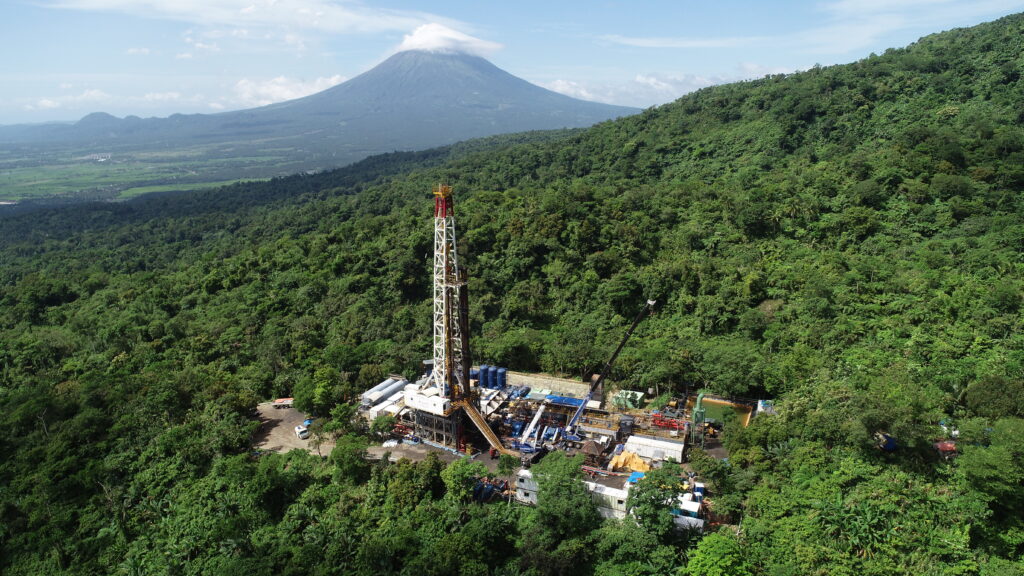
Its partnership with Japan’s GUUN, which converts non-recyclable waste into alternative fuel, is one example. The expansion of geothermal exploration through Philippine Geothermal Production Company is another. These are not transformational on their own, but they are repeatable and scalable.
The emphasis appears to be on practicality rather than speed, aligning environmental initiatives with operational and financial viability.
Financing is equally central to the picture. The Philippines faces a substantial climate funding gap in the coming years, and much of that will need to come from private balance sheets.
Here, SM’s banking subsidiaries play a role that extends beyond their individual businesses. BDO Unibank has deployed over PHP1 trillion into sustainable financing, while China Banking Corporation continues to expand lending to renewable and efficiency projects. For investors, this provides exposure not just to consumption, but to how that consumption is funded and sustained.
Despite the growing focus on transition, consumption remains the underlying driver. SM’s retail platform captures this directly, while its property developments extend it into longer-duration assets. At scale, these generate recurring income streams that support ongoing investment.
None of these elements (consumption, financing, or transition) are unique on their own. What is more distinctive is how they are linked.
For investors, the appeal lies less in any single business and more in how the system operates over time. Growth is not simply captured; it is circulated, reinforced, and, to some extent, smoothed.
In markets where volatility is becoming more structural, that may be where the difference lies.
If the Philippines continues to expand its consumption base while addressing its transition needs, groups that can connect these dynamics in a sustained way are likely to play a larger role.
SM appears to be positioning itself as one of them, not by emphasizing scale alone, but by relying on a structure that allows growth, capital, and transition to move together.