Aboitiz Equity Ventures:
As global allocators reassess emerging‑market exposure through the lens of governance, climate risk, and inclusive growth, the Philippines is increasingly framed as a transition story: from infrastructure‑catch‑up to a more consumption‑led, services‑heavy, lower‑carbon economy. In that context, Aboitiz Equity Ventures (AEV) offers one of the most comprehensive, listed platforms for investors seeking diversified, on‑the‑ground exposure to the country’s structural themes across power, banking and financial services, food and beverage, infrastructure, and real estate.
AEV’s portfolio is tightly mapped to the country’s macro priorities: ensuring reliable and cleaner power, deepening financial inclusion, strengthening food security, and upgrading hard infrastructure in regions where household incomes and formal economic activity are still catching up.
For institutional investors integrating ESG into risk and valuation models, this combination of breadth, sectoral relevance, and a growing sustainability focus makes AEV a core part of the Philippines’ investable universe.
Power and the Low‑Carbon Transition
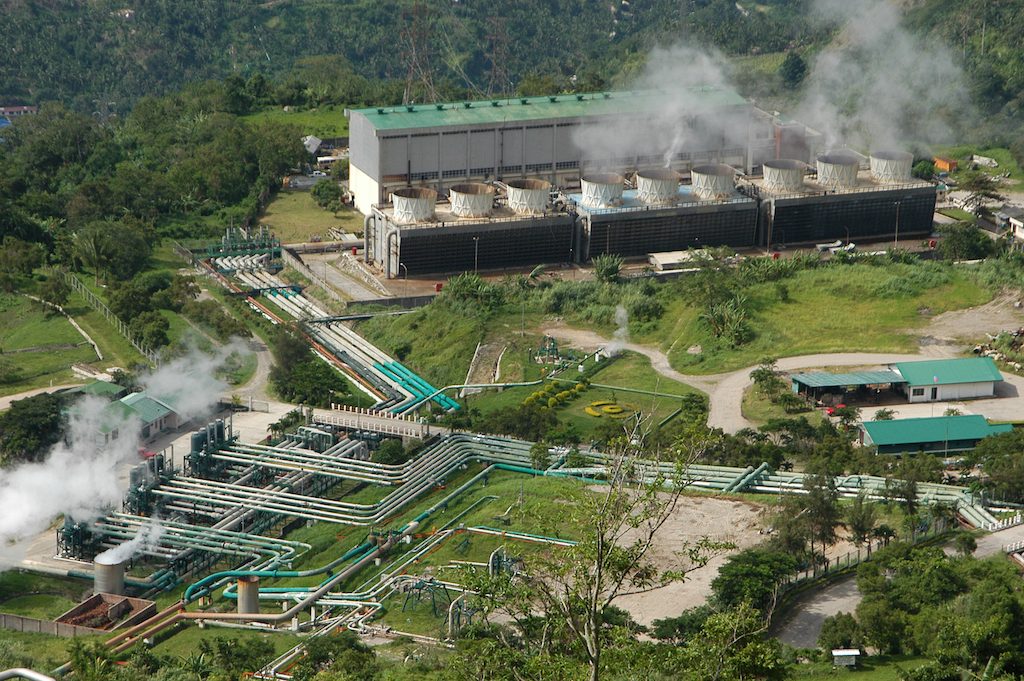
Energy security and decarbonisation sit at the heart of the Philippines’ transition challenge. AEV’s biggest earnings contributor, AboitizPower, is directly positioned in this space, with a portfolio spanning baseload generation, renewables, and distribution. The group has been expanding its renewable and transition‑enabling footprint through hydro, solar, wind, and other low‑carbon technologies, while maintaining the reliability that an industrialising economy demands.
This combination mirrors the country’s broader policy trajectory: steadily increasing the share of renewables while recognising the need for grid stability and affordability. For investors, AEV’s energy platform provides exposure to capex‑driven growth in generation and networks, as well as the shift in the earnings mix toward cleaner, more sustainable technologies over time. It also creates tangible ESG datapoints at the asset level, supporting the move from high‑level transition narratives to measurable outcomes.
Banking, Inclusion, and the Formalisation of the Cash Economy
The Philippines’ long‑run growth story hinges not just on GDP expansion, but on the formalisation of savings, credit, and payments for a still‑underbanked population. Through UnionBank and its broader financial services interests, AEV is deeply embedded in this theme. UnionBank’s digital‑first strategy and the integration of a large consumer portfolio have expanded its reach into mass‑affluent and emerging segments, while supporting the transition from cash to electronic payments and more sophisticated financial products.
For global investors, this is where the macro narrative of “financial inclusion” translates into bankable economics: higher transaction volumes, deeper customer data, and more diversified loan books.
As provincial markets see rising incomes and improved labour market conditions, AEV’s banking exposure becomes a conduit for turning new cohorts of previously under‑served consumers into fully banked, insured, and credit‑active clients.
Food, Consumer Staples, and Resilient Demand
While ESG debates often focus on energy and finance, the Philippines’ long‑term growth still rests on household consumption, with food and staples at its core. AEV’s food and beverage businesses give it direct exposure to this resilient demand.
Combining branded beverages with broader food operations, the group is positioned across the value chain: from production and processing to distribution into modern and traditional retail channels.
In a higher‑rate, higher‑inflation world, this matters for portfolio construction. Food and beverage earnings tend to display defensive characteristics while still benefitting from rising per‑capita consumption, premiumisation, and improving cold‑chain and logistics infrastructure. For investors, AEV’s food platform offers a way to tap into the Philippines’ growing middle class while staying anchored in basics that remain essential even when macro conditions are volatile.
Infrastructure and Underserved Markets
One of the defining features of the Philippine growth story is the need to close infrastructure gaps outside Metro Manila. Through Aboitiz InfraCapital and its economic estates, AEV is investing directly in that agenda, with assets spanning regional airports, water systems, telecom towers, and industrial parks. These are not only yield‑bearing infrastructure plays; they are also catalysts for development in underserved regions.
Economic estates and regional airports, for example, help attract foreign investment, support export‑oriented manufacturing, and generate employment clusters in new urban centres. Water and tower assets underpin both basic services and digital connectivity, which are increasingly critical to productivity and inclusion. For institutional investors focused on “just transition” and regional rebalancing, AEV’s infrastructure footprint offers a way to link returns to the physical build‑out that underpins long‑term growth and social stability.
Governance, ESG Integration, and Portfolio Resilience
As Philippine regulators push listed companies toward mandatory sustainability reporting aligned with global standards, the quality and comparability of ESG data will become a differentiator. AEV has been moving in that direction, integrating sustainability considerations into capital allocation, risk management, and operating practices across its core businesses.
What distinguishes AEV from a pure‑play in any single sector is how these sustainability and governance initiatives play out at the portfolio level. Power investments support the energy transition; banking fuels financial inclusion; food and beverages contribute to resilience and food security; infrastructure expands access and productivity in regions that are only now coming into their own. Taken together, these exposures create a conglomerate that is not only diversified by sector, but also aligned with the Philippines’ own transition to a more transparent, inclusive, and lower‑carbon growth model.
A CEO’s Perspective on the Next Phase
Sabin M. Aboitiz, President and CEO of Aboitiz Equity Ventures, frames the group’s strategy in explicitly national terms:
“Aboitiz Equity Ventures is focused on building businesses that sit at the heart of the Philippines’ future – reliable and cleaner power, inclusive finance, secure food systems, and modern infrastructure that reaches far beyond the major cities. By investing with discipline across these core sectors, we aim to deliver returns that are not only financially attractive, but also closely aligned with the country’s transition to a more sustainable, competitive, and inclusive economy.”
For allocators looking at the Philippines through the prism of ESG, low‑carbon transition, and underserved markets, AEV offers a rare combination: a single listed entry point into multiple critical sectors, under a governance framework increasingly oriented toward long‑term, risk‑adjusted value creation.